
EXPLORE WILD
BOTSWANA
A land of raw beauty, Botswana boasts some of Africa’s finest wildlife viewing and is hard to match for a safari holiday. Destinations include Chobe National Park, Linyanti Wetlands, Savute Marsh and the Okavango Delta, as well as the Kalahari Desert and its neighbouring salt pans. All of these adjoining parks, reserves and wildlife concessions are unfenced and combine to make one vast wilderness.

Image taken by Pascal King
CHOBE NATIONAL PARK
Chobe National Park covers about 11,600km² (4,500mi²) of northern Botswana and is the country’s third largest park. Known as the “Land of Giants” thanks to its enormous elephant population, the park is named after the Chobe River that meanders through a mixed terrain of floodplains, woodlands and marshland. While this is an old safari area – Dr. David Livingstone visited it in the 1850s, as have countless big-game hunters since – Chobe has become the most accessible and frequently visited of Botswana’s wilderness areas.
The riverfront is justifiably famous for its regular sightings of large herds of elephants and buffalo, and the prides of lion that have learnt to hunt them. It also boasts a large number of bird species, creating an ideal landscape for photographers.
WHAT TO EXPERIENCE


WHERE TO STAY
Our preferred accommodations include:
Chobe River Lodge – A small, owner-managed mid-range lodge located on the Chobe River in the small safari town of Kasane, just a short drive from the national park.
Chobe Game Lodge – A 47-room upper mid-range lodge and one of only two lodges located within the national park.
For more about Chobe National Park and the Okavango Delta to its south, read “CHOBE and the OKAVANGO DELTA – a comparison”.

A picnic lunch in Savute, taken by Darren Humphrys.
LINYANTI-SAVUTE
Adjoining the Linyanti river system and its erratic offshoot, the Savute Channel, four large private reserves, called ‘concessions’ (Kwando, Selinda, Linyanti and Chobe Enclave) protect high concentrations of wildlife. Like the exclusive safari reserves around the Okavango Delta to the south, these concessions offer a more remote, private safari experience when compared to being in the busier national parks. Morning walking safaris and night game drives are both allowed, as well as off-road driving (which makes finding predators much easier). The Linyanti-Savute (also spelled Savuti; it means “mystery”) region forms a natural link between Chobe National Park and the Okavango Delta. It’s an area made up of swamps, rivers, marshes, woodlands and grasslands which, when combined with the remote location, create the feeling of truly being in untouched, wild Africa. While the Linyanti remains a steady, yet seasonal river and ensures the continual survival of the Linyanti wetlands, its offshoot the Savute Channel offers no such certainty. The channel follows no laws visible to humans and flows only when it will – remaining dry for decades at a time. Tiny shifts in the tectonic plates below may hold the answers to the cycle, as might high water levels in the Zambezi and Chobe rivers. Whatever the source of the mystery, the Savute Channel is certainly erratic. After a drought that lasted 30-odd years, it flowed once more in 2010 and stayed that way until recently, when it started to dry up again and is currently better described as a lagoon.
WHAT TO EXPERIENCE

WHERE TO STAY
Our preferred accommodations include:
Linyanti Ebony Camp – A mid-range intimate tented camp on the edge of the Linyanti wetland, in the Chobe Enclave private reserve. Between April and November, there’s the real bonus of a complimentary helicopter flight over the wetlands (for stays of three nights or more).
Savute Safari Lodge – An upper mid-range lodge with thatch-and-canvas chalets overlooking the Savute Channel. It’s located within the remote and wild southern section of Chobe National Park and subsequently offers just the traditional morning and afternoon game drives.

Image taken by Kjarten Eie
OKAVANGO DELTA
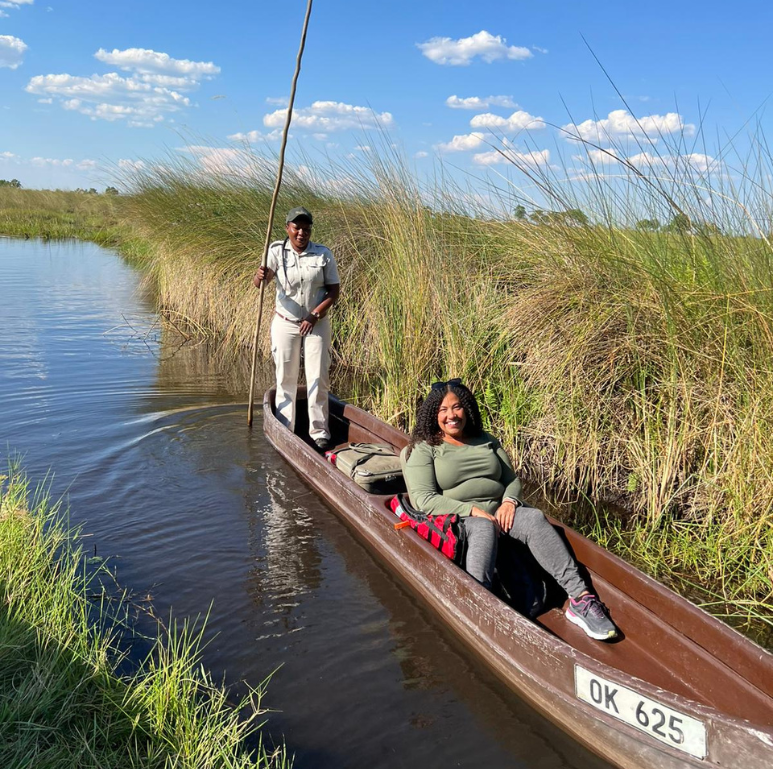
The Okavango Delta consists of some 6,000km² (2,300mi²) of permanent swamp and 12,000km² (4,600mi²) of seasonal swamp, and the resulting mosaic of channels, islands, lagoons, and forests supports a wealth of wildlife. Each year the waters flood, usually between May and September, before receding again, and the wildlife has adapted itself to these seasonal changes. Among these animals you can expect to see: elephant, buffalo, zebra, giraffe, wildebeest, impala, lechwe, sitatunga, reedbuck, bushbuck, hippo, crocodile and tsessebe. Predators – including lion, hyena, wild dog, leopard and cheetah – have also adapted to life in the delta, as have many smaller creatures. The range of bird life is simply staggering, with the channels and rivers home to kingfishers, pygmy geese, fish eagles, jacanas, darters and the elusive Pel’s fishing owl, plus many, many others. Set under leafy palms and towering African Ebony trees, accommodation in “the Delta” blends naturally into its unique surroundings, surrounded by wildlife-rich seasonal floodplains. The lodges are renowned for their personable and friendly service, as well as their fine cuisine served under large, thatched dining areas with sweeping views of the floodplains.
WHAT TO EXPERIENCE
WHERE TO STAY
Our preferred accommodations include:
Jacana Camp – Mid-range owner-managed camp set on a secluded island within the renowned private Jao Concession. It features just five elevated Meru-style tented suites and the main activities are the water-based mokoro and boat excursions. Subject to the water levels, bush walks and daylight game drives are usually available although when the water levels require guests to travel by boat between the camp and the wildlife areas, there are no night game drives because boats do not operate at night for safety reasons.
Kanana Camp and Pom Pom Camp – Upper mid-range camps located in their own private concessions in the southern section of the Okavango Delta. Bush walks and game drives are offered as well as water-based wildlife viewing from a mokoro and motorised boat. Kanana also offers a sleep-out deck under the stars.
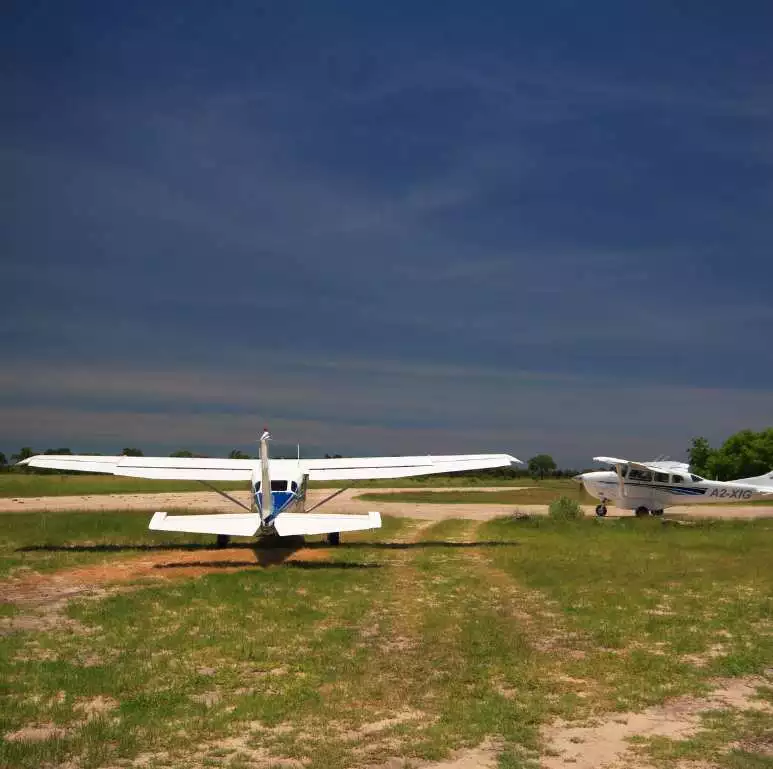
Karangoma Camp – Mid-range camp located on a forested peninsula in its own private concession within the remote northern section of the Okavango Delta – so remote that once you arrive at the nearest bush airstrip, you still have a 10-minute helicopter transfer to get you to the camp. Bush walks and game drives are offered as well as water-based wildlife viewing from a mokoro and motorised boat (subject to water levels).
Nokanyana Camp – Lower mid-range camp overlooking the confluence of the seasonal Khwai and Mababe rivers, within the wildlife-rich Khwai concession area in the south eastern region of the Okavango Delta. Water-based wildlife viewing is not possible here because the water is too deep and also a favoured haunt for hippos, so only bush walks and game drives are offered.
Shinde Camp – Upper mid-range camp located in its own private concession on the edge of an area of deep water and lagoons in the heart of the Okavango Delta. Wildlife viewing here is usually excellent – bush walks and game drives are offered as well as water-based wildlife viewing from a mokoro and motorised boat.

THE KALAHARI DESERT AND SALT PANS
Stretching across three countries and 930,000km² (roughly 360,000mi²), the Kalahari Desert is enormous. To the west, its reddish sands merge with those of the Namib Desert in an uninterrupted sand sea, halted only by the Atlantic Ocean; to the south the sands give way to the mountain ranges of the Cape and a cooler climate; and to the north and east the hills and rivers of Angola, Zambia and Zimbabwe give rise to a more verdant landscape.
Despite what is said, the Kalahari actually isn’t a desert per se. In fact it’s a vast ancient sand sheet now largely covered in bushes, trees and grasses. Fortunately all this sand has always seemed of little use so most of the Kalahari remains arid and untouched, as it has been for about 65 million years. Perhaps here more than anywhere else on their journey, travellers are struck by the feeling that they are light years away from modern life.
WHAT TO EXPERIENCE


WHERE TO STAY
Our preferred accommodations include:
Camp Kalahari – Mid-range option of three sister camps standing on palm islands just outside the eastern border of Makgadikgadi Pans National Park (the others are the high-end Jack’s Camp and San Camp). Offers game drives as well as nature walks with one of the camp’s Bushmen trackers, along with ‘other’ experiences such as horse riding, a sunset ‘lie-out’ on the pans, and a visit to one of the resident families of semi-habituated meerkats.
Dinaka Camp – Mid-range tented camp located in a private reserve bordering the Central Kalahari Game Reserve. Offers game drives, nature walks with one of the camp’s Bushmen trackers, a photographic bunker and a sleep-out deck under the stars.
Leroo La Tau – Luxury lodge set on the cliffs overlooking the Boteti River and the western boundary of the Makgadikgadi Pans National Park. Offers game drives and boat safaris as well full day drives to Nxai Pan and the Makgadikgadi salt pans, which are too far away to be visited on a short game drive. Also offers a sleep-out on the salt pans.
Nxai Pan Camp – Mid-range lodge built in a semi-circle facing towards an active waterhole and onwards to the open plains of the pan. It’s the only permanent lodge-style accommodation within Nxai Pan National Park, and offers morning and afternoon game drives as well as nature walks with one of the camp’s Bushmen trackers.
Tau Pan Camp – Mid-range camp sitting on the ridge of an ancient sand dune and offering commanding views over the surrounding plains to Tau Pan and beyond. The first permanent camp to open inside the Central Kalahari Game Reserve – and still one of only two within the reserve – morning and afternoon game drives are offered as well as nature walks with one of the camp’s Bushmen trackers.
Journeys that include BOTSWANA
5-Day Zambezi-Okavango Safari

This 5-day journey takes you to the magnificent Victoria Falls, one of the Seven Natural Wonders of the World, followed by a 3-day excursion deep into the untouched wilderness of the Okavango Delta.
9-Day Botswana Wildlife Safari

This 9-day safari takes you through Botswana’s most spectacular wilderness areas, combining land and water-based wildlife experiences. From the elephant-rich riverbanks of Chobe National Park to the remote, predator-filled landscapes of Linyanti-Savute, and finally, into the shimmering waterways of the Okavango Delta.
16-Day Southern Africa Safari

This 16-day safari explores the iconic African city of Cape Town with our specialist local guide, visits the majestic Victoria Falls and mighty Zambezi River straddling Zambia and Zimbabwe, and includes quality wildlife viewing in the famous safari regions of South Africa’s Greater Kruger and Botswana’s Chobe-Okavango Delta, offering the ‘big three’ of game drives, bush walks and water-based wildlife viewing as well as a memorable “lunch with the elephants”.
Frequently asked questions
When is the best time to visit Botswana?
The seasons in Botswana are generally the same as in other southern hemisphere countries, with spring/summer from October to April and winter/autumn from May to September.
SAFARI REGIONS – WET SEASON
November to March is what we term the “wet season” in Botswana. The weather is generally characterised by hot, humid days that are sometimes cooled down by afternoon thunderstorms and accompanying light-to-heavy showers. Due to the rain, the vegetation is at its highest and thickest during these months and this can impact on wildlife viewing because the thick foliage can obscure your view plus the wildlife is widely dispersed due to the amount of ground water available. However, this season of abundance can still be a great time to be on safari as it’s the time that many mammals give birth. These ‘nurseries’ are usually easy to locate/view and make for some wonderful memories and photographic opportunities. It’s also worth noting that there are always resident populations of predators that prey upon the newborn, and the guides at your camp/lodge will have a good idea of where to find them. The birding is also very good at this time due to the increase in insect activity. Perhaps best of all, there are far fewer visitors to Botswana’s safari regions during the wet season and the cost of accommodation is usually much more affordable.
SAFARI REGIONS – DRY SEASON
Travelling in Botswana between April to September usually offers clear and warm days and generally no rain at all. Known as the “dry season”, this is regarded the best period for wildlife viewing as the permanent waterholes attract many animals and the thin vegetation offers unobstructed views. While the dry, brown landscape can be a bit underwhelming, the wildlife viewing can be exceptional. Botswana’s Okavango Delta is worth a special mention, as the dry season is when the annual flood enters the delta from further upstream and you therefore have the amazing contrast of a barren, dry landscape pocketed with flooded channels that are flanked with verdant growth. The temperature during the dry season is mild to warm, however the evenings can get surprisingly cold from dusk to dawn. While the morning game drive initially requires warm clothing, the day has usually warmed up considerably even before the end of the drive and you are taking off layers by the time you return to your camp/lodge.
OCTOBER
It’s worth noting that the month of October can be especially hot and uncomfortable in Botswana, as the rains have usually not arrived but the cool winter weather has usually ended. But your wildlife viewing will be tailored around this, with your game drives departing very early in the morning as well as later than usual in the afternoon.
What do I need to know about visas?
Your passport must be valid for at least six months after the end of your time in Botswana, and it is a good idea to bring a few photocopies in case you lose the original. In addition to a passport, children under 18 years of age entering Botswana with only one parent or with parents who have a different surname are required to produce additional documentation upon arrival. Although most visitors are not required to obtain a visa before entering Botswana, this is not applicable to all nationalities – please contact us for clarification.
Prior to your safari, we provide you with a personal Safari Dossier that includes a swathe of information including the booking references, transport timings and contact addresses/numbers specific to your journey.
What do I need to know about TRAVELLERS HEALTH?
No compulsory vaccinations are required to enter Botswana. A Yellow Fever vaccination certificate is not required unless you are coming from – or you are in airport transit for more than 12 hours within – a country deemed to be infected with Yellow Fever. The World Health Organisation lists the southern African countries of Botswana, Lesotho, Malawi, Mozambique, Namibia, South Africa, Swaziland, Zambia and Zimbabwe as being free from Yellow Fever. Malaria is present in most of Botswana.
Please speak to us regarding our recommended health precautions for travelling in Botswana.